
Aug 1, 2025
Dental Treatments with CAD/CAM Technology
One of the most remarkable developments is Dental Treatments with CAD/CAM Technology. Thanks to advanced computer-aided…
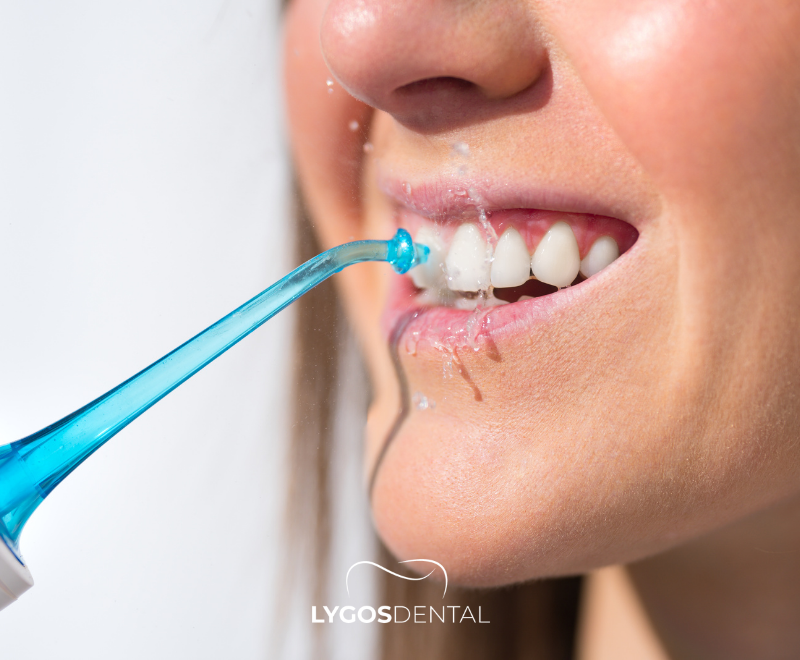
Dental floss and oral irrigators (water flossers) both clean between teeth, but they work differently. Floss physically scrapes plaque from tight contacts, while an oral irrigator uses a targeted water stream to flush debris along the gumline and around braces or implants. Many people get the best results by using one consistently—or combining both.
Good oral hygiene does more than keep your smile looking clean. It helps lower the risk of tooth decay, gum disease, and persistent bad breath. Healthy gums also make it easier to eat comfortably and maintain dental work such as fillings, crowns, or implants.
Daily brushing is essential, but a toothbrush cannot fully clean the tight spaces between teeth or the edge of the gumline. That’s why interdental cleaning—using floss, a water flosser, or both—matters for long‑term gum health.
Dental floss is a thin thread (waxed or unwaxed, tape-style, or specialty options) used to clean between teeth. When used correctly, it gently slides under the contact point and wipes plaque from the sides of each tooth.
Floss is especially useful where teeth touch tightly. It can also help you notice rough edges, food traps, or areas that bleed easily—signals that you may need to improve technique or check in with a dentist.
• Strong plaque removal in tight contacts where water may not scrub effectively.
• Low cost, easy to carry, and widely available.
• Helpful for people who prefer a precise, manual clean.
• Available in different formats (string floss, tape, floss picks, and specialty floss for wider gaps).
An oral irrigator, often called a water flosser, uses a controlled stream of water to flush food debris and plaque from between teeth and along the gumline. Many devices allow you to adjust pressure, which can improve comfort if your gums are sensitive.
Water flossers can be easier to use for people with braces, bridges, implants, or limited hand dexterity. They can also help clean around orthodontic wires and hard‑to‑reach areas where string floss is difficult to thread.
• Gentle on gums when used at an appropriate pressure.
• Effective for cleaning around braces, fixed retainers, bridges, and implants.
• Convenient for people who struggle with traditional floss.
• The water stream can help wash away loose debris and support gum comfort as part of a consistent routine.
Floss may be your best primary tool if you have tight contacts between teeth, want the strongest mechanical plaque removal, and you’re comfortable with the technique. If your gums bleed at first, keep going gently for a week or two—persistent bleeding is a reason to seek dental advice.
A water flosser can be a better fit if you have braces, implants, bridges, or sensitive gums, or if flossing is difficult due to limited hand mobility. Start on a low pressure setting and aim the tip along the gumline, pausing briefly between teeth.
For many people, combining both tools works well: floss to wipe plaque off tooth surfaces, then use a water flosser to flush along the gumline and around dental work. If you only choose one, consistency matters more than the tool itself.
• Floss once a day: curve it into a “C” shape around each tooth and move it gently up and down.
• With a water flosser: use warm water, start low, and lean over the sink to reduce splashing.
• Replace brush heads and flossing tips as recommended by the manufacturer.
• If you have gum pain, frequent bleeding, or loose teeth, book a dental check‑up—tools help, but they don’t replace professional care.
Yes, you still need floss; irrigators help but don’t fully remove sticky plaque.
No, it can substitute when flossing is difficult, but floss removes plaque mechanically.
Yes, many dentists recommend irrigators as an adjunct, especially with braces or implants.
Flossing is best for removing stuck plaque; water flossers are best when flossing is hard.
Yes, many hygienists recommend water flossers, especially for braces, implants, or dexterity limits.

One of the most remarkable developments is Dental Treatments with CAD/CAM Technology. Thanks to advanced computer-aided…
 Blog
Blog
Learn about smile design, its benefits, procedures, costs, and aftercare tips. Explore how smile design can…
How to Brush Your Teeth Properly Brush twice a day for two minutes using a soft-bristled…