
Sep 5, 2025
What Is Good for Dry Mouth? | LYGOS DENTAL
So, what is good for dry mouth? In this article, you will find everything from what…
Most people with well-controlled diabetes can get dental implants safely. The key is stable blood sugar before and after surgery, healthy gums, and careful aftercare. Many clinics look for an HbA1c around 7% (53 mmol/mol) or lower, with final decisions tailored to your overall health and infection risk.
Diabetes can affect how quickly the body heals and how well it fights infection. When blood glucose runs high, soft tissue repair may slow down and inflammation can stay active longer.
Dental implants depend on predictable healing of the gum tissue and the jawbone. If healing is delayed, the implant may take longer to integrate with bone, and the risk of early infection increases.

In many cases, yes. Diabetes alone does not disqualify you from implant treatment, especially when your blood sugar is stable and your mouth is healthy.
Your dentist will usually review your recent medical history, medications, gum health, bone quality, and day‑to‑day glucose control. Coordination with your physician may also be recommended for patients with complex medical histories.
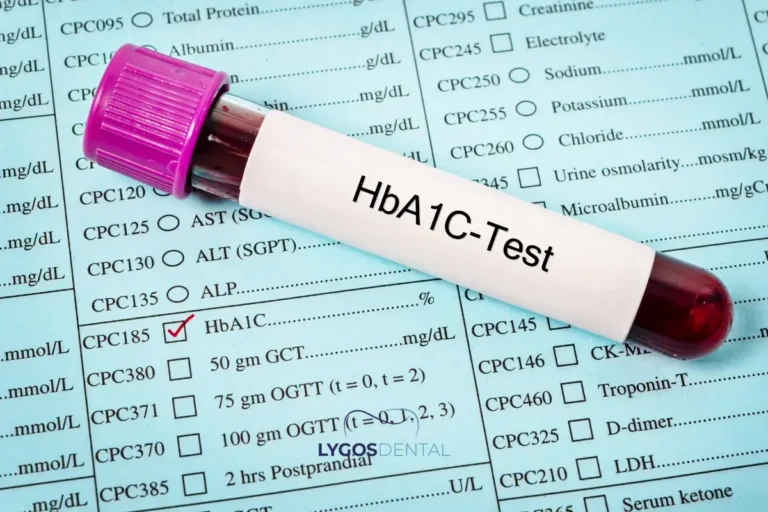
HbA1c reflects your average blood sugar over roughly the last 2–3 months. Because it is linked to healing and infection risk, many clinics use HbA1c as a practical benchmark before implant surgery.
A common target is around 7% (53 mmol/mol) or lower. Some patients with results slightly above this may still be eligible, but higher HbA1c values often mean it is safer to improve control first.
If your HbA1c is elevated, your dentist may delay surgery and work with you on a plan that can include periodontal treatment, hygiene support, and medical follow‑up. That delay is about reducing risk, not denying treatment.
Implant candidacy depends on overall health, gum stability, and your ability to follow aftercare. These factors matter for everyone, but they carry extra weight in diabetes.
Implants may not be recommended, or may need to be postponed, if you:
If any of these apply, it does not always mean “no.” It often means “not yet,” with a focus on stabilizing the risk factors first.
Planning is usually more detailed, with an emphasis on preventing infection and supporting healing. Your clinician may recommend a periodontal assessment, professional cleaning, and imaging before confirming the surgical plan.
Some practices use short-term antiseptic rinses and, in selected cases, preventive antibiotics. You will also be given a clear plan for pain control, nutrition, and home care that will not disrupt glucose management.
Healing time varies, but the goal is the same: stable gums, low inflammation, and strong bone integration. Many people with controlled diabetes heal on a similar timeline to non‑diabetic patients, while others need a little longer.
After surgery, focus on these basics:

The main long‑term concern is peri‑implant inflammation (mucositis or peri‑implantitis). Diabetes is associated with a higher risk of these complications, especially when glucose control is poor.
The best protection is routine maintenance: daily home cleaning, regular professional cleanings, and early treatment if bleeding or deep pockets develop. If you have a history of gum disease, your maintenance schedule may be more frequent.
Yes, with well-controlled diabetes and coordinated care, dental implants are usually appropriate.
People with poorly controlled diabetes should avoid implants until diabetes is controlled.
Yes, controlled diabetics can get fixed implant-supported dentures after medical and dental assessment.
Know your HbA1c, gum health, bone volume, medications, and smoking status beforehand.
Yes, if HbA1c is controlled; otherwise infection and failure risks increase.
About 96–97% at 1 year and 87–96% at 5 years controlled diabetes.
