
Dec 3, 2025
Brushing Teeth with the 3-3-3 | LYGOS DENTAL
So, how does tooth loss affect speech? In this article, we will examine in detail the…
Dental tourism in Turkey means traveling to Turkey for dental care—often implants, veneers, crowns, or whitening—at prices that can be lower than in the UK, EU, or North America. Many clinics offer modern technology and English-speaking teams. The key is choosing a properly licensed clinic, confirming what’s included in your quote, and planning follow-up care at home.
Turkey has become a well-known destination for patients who want high-quality dentistry with clearer pricing and shorter waiting times. Major cities such as Istanbul, Antalya, and Izmir host clinics that focus on international patients, with treatment plans built around travel schedules. For many visitors, the appeal is the mix of modern clinics, experienced dentists, and the chance to combine care with a city break.
That said, results depend heavily on the provider you choose. Dentistry isn’t a commodity, and the cheapest quote is rarely the best value. If you’re considering treatment abroad, it pays to understand common procedures, typical costs, timelines, and the practical checks that reduce risk.
In simple terms, dental tourism is when you travel to another country for dental treatment that is expensive or slow to access at home. In Turkey, international patients most often come for cosmetic dentistry, implant dentistry, and full-arch restorations.
Many clinics offer remote consultations before you travel. You can usually share dental X‑rays, photos, and a short medical history to receive a preliminary plan, then confirm details after an in-person exam and 3D imaging once you arrive.
Implants are a common reason people fly to Turkey, especially for missing teeth, unstable bridges, or loose dentures. Typical quotes vary based on implant brand, imaging, bone grafting needs, and whether the crown and abutment are included. Patient platforms and clinic price guides commonly list single-implant packages in the range of roughly $470–$700, with wider variation depending on what’s included.
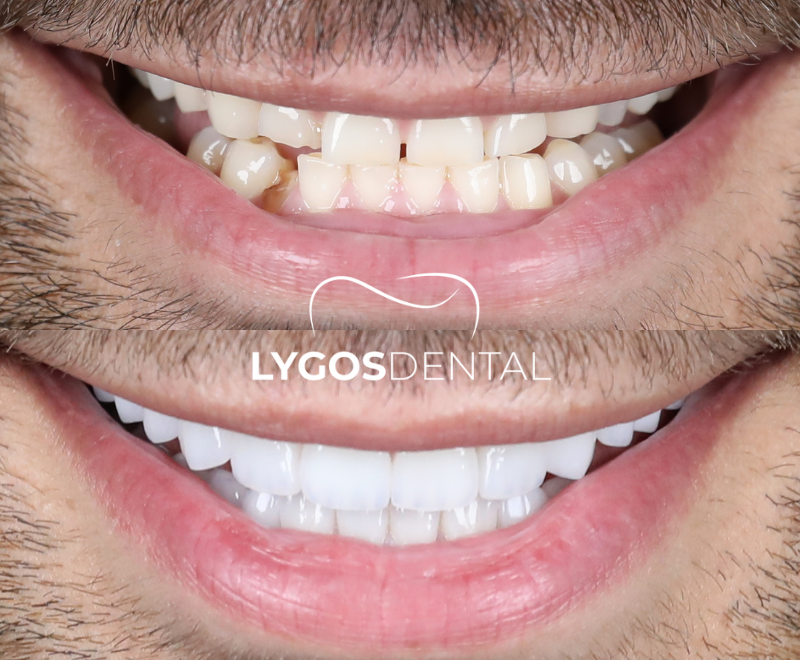
Veneers are used to change tooth shape, colour, and alignment for a more uniform smile. Prices depend on material (composite vs porcelain), lab quality, and whether you need gum contouring or bite adjustments. Recent Turkey-focused price guides commonly put veneers around $150–$250 for composite and $250–$450 for porcelain, with premium materials (such as E‑max) often higher.
In-office whitening is popular because it can be completed in a single visit. Pricing depends on the system used (LED, laser, Zoom-style treatments) and whether scaling is required first. Typical Turkish clinic ranges are often quoted around $200–$400 per session, while clinics in the US commonly list several hundred dollars to around $1,000 for in-office whitening.
For orthodontics, Turkey offers both fixed braces and clear aligners. Because aligner treatment requires multiple check-ins, many visitors choose a local orthodontist for long-term monitoring or plan shared-care between countries.
Patients who need extensive work sometimes choose full-arch solutions such as All-on-4 style treatment. Costs vary widely by material and complexity, but patient platforms frequently list All-on-4 packages in Turkey roughly between $2,100 and $6,000 per arch, compared with higher typical ranges reported in the US.
Real prices vary by city, clinic, and what’s included (consultations, CBCT scans, abutments, crowns, temporary teeth, sedation, and follow-ups). Use ranges as a planning guide, then ask for a written, itemised quote.
Single dental implant (often quoted as implant + abutment + crown): $470–$700+ in Turkey (packages vary)
Porcelain veneer (per tooth): $250–$450
Composite veneer (per tooth): $150–$250
In-office teeth whitening: $200–$400
All-on-4 style full-arch implants (per arch): $2,100–$6,000
If you’re comparing against the UK, private implant quotes are commonly reported in the £1,800–£4,500 range per tooth, and implants are only available through the NHS in limited clinical circumstances. That gap is one of the main reasons some patients look abroad.
Istanbul is the most common entry point for dental visitors because it has a large choice of clinics, direct flights, and plenty to do between appointments. Most treatment plans involve at least two visits to the clinic, with free time in between for light sightseeing.
If you’re having surgery (implants, grafting, extractions), keep plans low-key. Gentle walking is fine for many people, but crowded tours, long day trips, and heavy exercise can make swelling and discomfort worse.
Most reputable clinics can show real case examples, explain material choices, and set realistic expectations about shade, shape, and bite changes. Ask for examples that match your starting point, not just the ‘perfect smile’ cases.
If you’re choosing veneers or crowns, the planning stage matters as much as the final fitting. A careful smile design, temporary teeth (when needed), and a bite check reduce the chance of sensitivity, chipping, or an unnatural look.
For cosmetic procedures like whitening or a small number of veneers, a short trip may be enough. Implants usually require staged visits because the implant needs time to integrate with bone before the final crown is fitted.
Good clinics will explain what can be completed on the first visit, what needs healing time, and whether you should plan a second trip. If your schedule is tight, ask about temporary options that look good while you’re waiting for final restorations.
Is dental treatment in Turkey safe?
Many clinics deliver excellent care, but safety depends on the provider. Choose a licensed clinic, confirm hygiene standards, and make sure your plan includes proper diagnostics (especially CBCT imaging for implants) and clear aftercare.
Do dentists in Turkey speak English?
In clinics that work with international patients, English-speaking staff are common, and translation support may be available. Ask who will translate during clinical appointments so nothing is lost in communication.
Can I travel around after treatment?
After non-invasive treatments you can usually explore as normal. After surgery, keep travel light for a few days and avoid long trips that would make it hard to return to the clinic if you need a check-up.
Will my dentist at home provide follow-up care?
Some dentists will help with routine checks, but they may not take responsibility for work done elsewhere. It’s smart to plan where you’ll go if you need adjustments, repairs, or ongoing maintenance.
Is Turkish dental work internationally recognised?
Quality is clinic-dependent. Focus on the dentist’s training, materials used, documentation (treatment notes, implant passport, warranties), and whether the clinic can provide clear medical records for your dentist at home.
If you’re considering treatment in Turkey, start with a remote consultation. Share recent X‑rays if you have them, explain your goals, and ask for a written plan that lists materials, timeline, and total costs. A clear, itemised quote makes it easier to compare clinics on quality—not just price.
