
Apr 28, 2025
How To Find A Pediatric Dentist Near Me?
So, the big question is, How To Find A Pediatric Dentist Near Me? In this blog,…
Used occasionally and gently, baking soda can help remove surface stains from coffee, tea, or smoking. It does not bleach teeth or change their natural shade, and it isn’t a substitute for fluoride toothpaste. Avoid mixing it with acidic ingredients like lemon or vinegar, and stop if you notice sensitivity or gum irritation.
Baking soda (sodium bicarbonate) is a common home remedy for a brighter smile because it can polish away some external staining. That said, “natural” doesn’t always mean risk-free. The safest approach depends on how you use it, how often you use it, and your enamel and gum health.
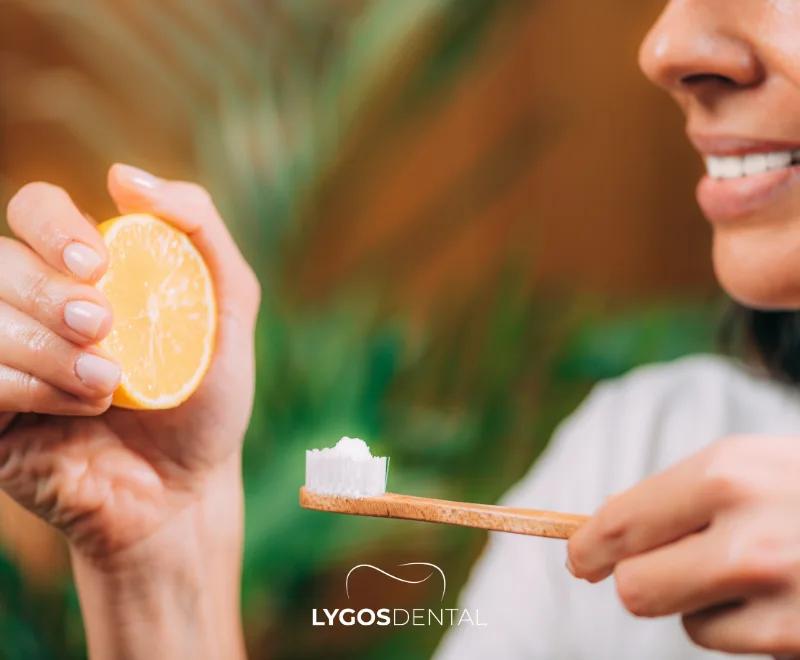
Baking soda is mildly abrasive and alkaline. When you brush with it, it can help loosen plaque and lift superficial stains that sit on the enamel surface. Because it is alkaline, it can also help neutralize acids in the mouth that contribute to enamel demineralization.
It can make teeth look whiter by removing surface discoloration, not by bleaching the tooth. Stains caused by coffee, tea, red wine, and tobacco are the most likely to improve. If your teeth look darker because of genetics, aging, medications, or trauma, baking soda won’t meaningfully change the underlying shade.
Evidence reviews note that baking soda has an intrinsically low abrasive nature compared with many other common toothpaste abrasives, and baking-soda dentifrices are considered low in abrasivity. The bigger safety issues usually come from brushing too hard, brushing too long, using it too frequently, or pairing it with acidic DIY mixes that can soften enamel first.
Plain baking soda also does not contain fluoride, which is a key ingredient for cavity prevention. If you replace your regular toothpaste with baking soda long-term, you may miss out on the daily fluoride exposure that helps strengthen enamel.

For most adults, occasional use is the safest way to treat baking soda as a stain-removal booster rather than a daily toothpaste replacement. A common rule of thumb from dental clinicians is once a week or less, especially if you have sensitivity.
Skip recipes that combine baking soda with lemon juice, vinegar, or other acidic ingredients. Acids can soften enamel, and brushing right after that can increase wear.
Avoid or get dental advice first if you have moderate to severe tooth sensitivity, gum recession, enamel erosion, untreated cavities, or lots of exposed root surfaces. It’s also not a good idea for children because enamel is still developing and they benefit most from consistent fluoride use.
If you want predictable whitening, a product designed for teeth usually gives better results with clearer safety directions. Consider these options, starting with the least intensive.
A fluoride toothpaste that contains baking soda can help with daily plaque removal and surface stain control while still supporting cavity prevention. This is typically a better long-term choice than brushing with plain baking soda.
Over-the-counter whitening strips and gels use peroxide to chemically break down stains, so they can lighten beyond surface discoloration. Follow the instructions closely and take breaks if sensitivity starts.
If you have crowns, veneers, bonding, or uneven tooth color, dentist-supervised whitening is often the safest route. A dentist can also check for cavities or cracks first and recommend a plan that fits your enamel and gum health.
Activated charcoal products are popular online, but evidence for meaningful whitening is limited and abrasivity varies widely by product. Some charcoal powders and toothpastes are fluoride-free, which can be a drawback for cavity prevention.
No. It mainly removes surface stains, so results tend to fade if the staining habits (coffee, tea, tobacco) continue.
Daily use is not ideal for most people, especially if you brush hard or have sensitivity. A fluoride toothpaste is a better daily baseline.
It can help if the yellow appearance is from surface staining. If the color comes from dentin showing through thinner enamel, baking soda won’t change that.
Stop the baking soda routine and switch to a fluoride toothpaste for sensitive teeth. If sensitivity persists for more than a few days, book a dental checkup.
