
Dec 23, 2025
Itchy Gums: Causes and Treatment
So, how does tooth loss affect speech? In this article, we will examine in detail the…
Millie Bobby Brown has never publicly confirmed getting veneers, so any specific claims about her dental work are speculation. What’s clear is that veneers and professional whitening can dramatically change a smile’s color and symmetry. If you’re considering a similar look, the safest approach is an in-person exam and a conservative treatment plan tailored to your teeth.
Celebrity smiles are photographed under strong lighting, heavy retouching, and different camera lenses, so small changes can look dramatic. As actors get older, natural dental development, orthodontic history, whitening, and routine dental care can also change how teeth appear on screen. That mix makes it easy for online rumors to spread—even when no treatment has been confirmed.
Millie Bobby Brown is a British actress and producer who rose to international attention for playing Eleven in Netflix’s “Stranger Things.” She was born in 2004 in Marbella, Spain, and later lived in England and the United States. Alongside acting, she has expanded into producing and business projects, which keeps her in the public eye and fuels interest in her style choices.
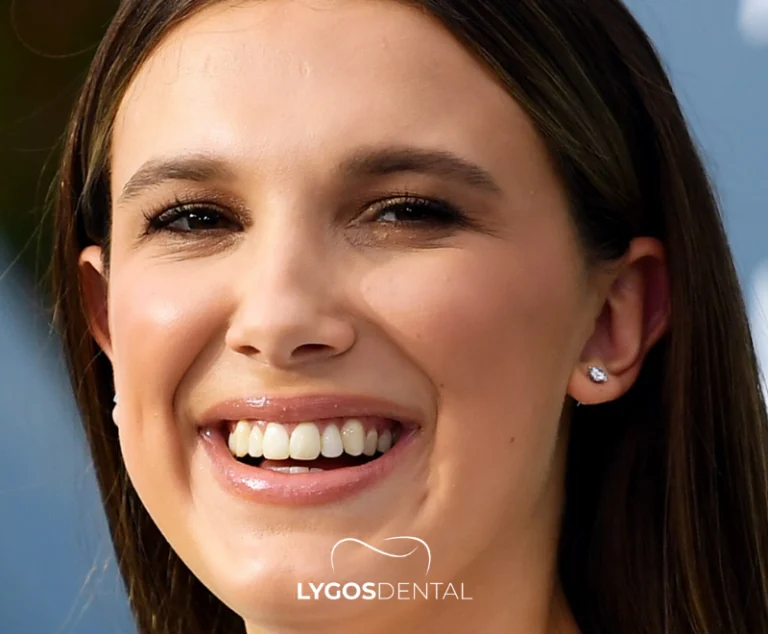
There is no official confirmation that Millie Bobby Brown has had veneers or any other specific cosmetic dental procedure. Online comparisons of “before and after” photos can be misleading because of angles, makeup, lighting, editing, and changes that happen naturally with age. If you’re reading claims that state a particular treatment as fact, treat them as unverified unless they come directly from a reliable statement or interview.
When a smile looks brighter, smoother, or more even, it can be the result of one treatment—or a combination. Here are common cosmetic options dentists use to improve color and symmetry:

Veneers are custom-made covers placed on the front surface of teeth. They can correct discoloration that doesn’t respond well to whitening, hide chips and wear, and improve the appearance of mild spacing or uneven edges. Good veneer work aims to look natural—matching your face, lip line, and tooth proportions rather than chasing an overly bright, uniform look.
Both materials can improve aesthetics, but they differ in durability, finish, and the amount of tooth preparation required:
Porcelain tends to be stain-resistant, highly polished, and long-lasting when properly planned and cared for. They are typically fabricated in a lab and may require enamel reduction depending on the case.
Composite veneers are often applied directly in the clinic. They can be more affordable and quicker, but they generally stain and wear faster than porcelain. In many cases, they’re useful for smaller cosmetic changes or as a step before committing to porcelain.
If you’re comparing photos online, focus on the signals that are more informative than “whiter teeth.” Ask whether the tooth length changed, whether edges look more uniform, and whether the overall smile line appears more even. Still, remember that photography and editing can mimic these effects, so photos alone can’t confirm a procedure.
Veneers can be a great option if your teeth are healthy and your goals are realistic. They’re not the first choice for everyone, especially if you have untreated decay, gum disease, heavy grinding, or a bite issue that needs orthodontic correction. A cosmetic dentist should evaluate enamel thickness, gum health, bite forces, and your smile design goals before recommending veneers.
Veneers are medical devices bonded to living teeth, so planning matters. Possible downsides include tooth sensitivity, chipping, gum irritation if margins are poorly designed, and the fact that some veneer cases require enamel removal. To protect your investment, use a night guard if you grind, keep up with hygiene and cleanings, and avoid habits like biting hard objects or opening packaging with your teeth.
Turkey is a well-known destination for dental tourism, partly because clinic overheads can be lower than in the UK or US. Prices vary by city, clinic reputation, materials (standard porcelain vs. e.max), and how much work is included (design, temporary veneers, scans, warranty, and aftercare).
As a broad range, many clinics advertise porcelain veneers in Turkey starting roughly around $200–$350 per tooth, with premium options (such as e.max) often higher. Treat any advertised price as a starting point—your final quote depends on your bite, gum health, the number of teeth treated, and whether you need extra procedures like gum contouring or whitening.
If you’re considering veneers abroad, prioritize safety and long-term results over a quick “Hollywood smile” package. A reputable clinic should be comfortable answering detailed questions and showing real case work.
No—she hasn’t publicly confirmed having veneers.
She hasn’t publicly explained; any method used without braces remains unconfirmed.
She hasn’t publicly stated why; any reasons for dental changes remain unconfirmed.
No—real-life veneers haven’t been publicly confirmed by her.
No—she hasn’t publicly confirmed getting veneers done.
