Teething is a normal stage that can bring drooling, tender gums, and a strong urge to chew. Many widely shared “facts” are myths—like blaming every fever or diarrhea on new teeth. Knowing what’s typical, what isn’t, and how to soothe sore gums safely helps you care for your baby with confidence.
Teething is part of normal development, but it’s also a stage surrounded by half-truths. Some myths can lead parents to miss signs of illness, while others encourage remedies that aren’t safe for babies.
Below are the most common teething myths, what the evidence and pediatric guidance supports, and practical ways to keep your baby comfortable.
Signs Of Teething
Babies can show different teething signs, and symptoms may come and go as each tooth moves through the gums.
Common signs include:
Irritability or fussiness
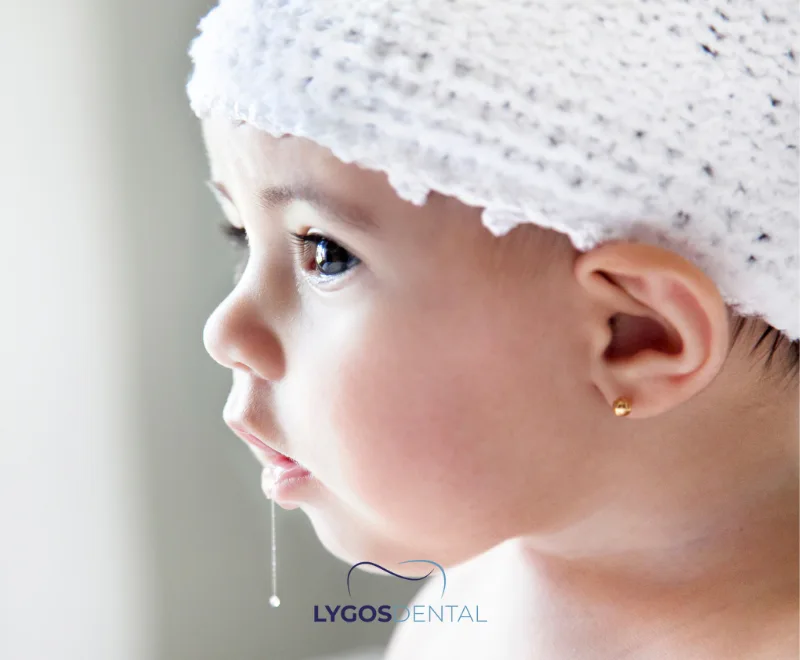
More drooling than usual (sometimes with a mild rash on the chin or cheeks)
Swollen or tender gums where the tooth is coming through
Chewing or gnawing on fingers, toys, or other safe objects
Changes in sleep or appetite for a short period
Myth check: teething can make babies uncomfortable, but it shouldn’t be used to explain away significant symptoms such as a high fever, persistent vomiting, or severe diarrhea.
Table of Contents
When Does The First Tooth Erupt?
Many babies get their first tooth around 6 months, but a normal range is broad. Some start closer to 4 months, while others don’t see a first tooth until later in the first year.
The first tooth is often one of the lower front teeth. After that, teeth typically come in a pattern, but the exact order and timing can vary from baby to baby.
Should Baby Teeth Be Cleaned?
Yes. Baby teeth need care from the start, even though they’re temporary.
Once a tooth appears, gently clean it twice a day. A soft, age-appropriate brush and a smear of fluoride toothpaste (about the size of a grain of rice) is commonly recommended—your pediatrician or dentist can confirm what’s right for your baby.
Early habits help prevent cavities, protect gum health, and support healthy spacing for adult teeth later on.
Does Teething Hurt?
Teething discomfort is real, but it isn’t the same for every baby. Some barely notice new teeth, while others have sore, swollen gums for a few days at a time.
A myth worth dropping: teething doesn’t automatically mean constant crying. If your baby seems unusually distressed or unwell, it’s smart to look for other causes.
Safe, Natural Remedies For Teething
Simple, low-risk comfort measures usually work best. Try one option at a time so you can see what helps.
Offer a chilled (not frozen) teething ring. Cold can reduce gum swelling and soothe soreness.
Let your baby chew on a clean, cool washcloth. Supervise closely and remove it if it starts to fray.
Gently rub your baby’s gums with a clean finger for a minute or two.
Keep drool under control with soft wipes and a protective barrier cream on irritated skin (avoid fragranced products).
Avoid risky “quick fixes” such as teething jewelry (choking/strangulation risk) or numbing gels and liquids unless a clinician specifically recommends them for your child.
Common Mouth Problems During Teething
Most teething-related mouth issues are temporary. These tips can help:
Gum tenderness or minor bleeding: Use gentle pressure with a clean finger or gauze. If bleeding is heavy or keeps returning, call your child’s clinician.
Drool rash: Pat the skin dry and apply a thin layer of barrier cream. Keep bibs clean and dry.
Reduced appetite: Offer softer foods and smaller, more frequent feeds. Watch for dehydration signs such as fewer wet diapers.
Mouth sores: Occasional irritation can happen from chewing. If sores are widespread, persistent, or your baby refuses feeds, seek medical advice.
When To Call A Doctor
Teething shouldn’t mask illness. Contact your pediatrician (or urgent care) if your baby has:
A temperature of 38°C (100.4°F) or higher
Diarrhea, vomiting, or signs of dehydration
Trouble breathing, a widespread rash, or extreme sleepiness
Crying that is intense, persistent, and not eased by comfort measures
Any symptom that worries you or feels out of character
Myths About Teething: Frequently Asked Questions
Is there a link between early teething and IQ?
No, early teething isn’t linked to higher or lower IQ in evidence.
What are the worst months of teething?
Molars often cause worst symptoms, typically around 12–19 months and 23–33 months.
What vitamins help with teething?
No vitamins reliably help teething; avoid supplements unless prescribed for deficiency.
Does breastfeeding help with teething?
Breastfeeding can soothe teething discomfort, but it doesn’t change tooth-eruption timing.
What time of day is teething the worst?
Nighttime is often worst, when distractions drop and discomfort feels more noticeable.




 Blog
Blog