
Feb 18, 2025
Kristen Bell Teeth Veneers | LYGOS DENTAL
Kristen Bell is a well-known American actress, widely recognized for her performances in TV series like…
Autoimmune diseases can trigger mouth ulcers, soreness, and persistent dryness when immune activity inflames the oral tissues or damages salivary glands. The most common causes include Behçet’s disease, lupus, Sjögren’s syndrome, and pemphigus vulgaris. Management usually combines treating the underlying condition with local pain control and careful oral care.
Autoimmune diseases are long-term conditions in which the immune system mistakenly targets the body’s own tissues. When the mouth is involved, symptoms can feel disproportionally disruptive—pain can make eating, speaking, and toothbrushing difficult.
Oral lesions are not always caused by autoimmune disease, but recurring or unexplained problems in the mouth can be an early clue. A dentist or physician may use these signs, together with other symptoms, to guide testing and diagnosis.
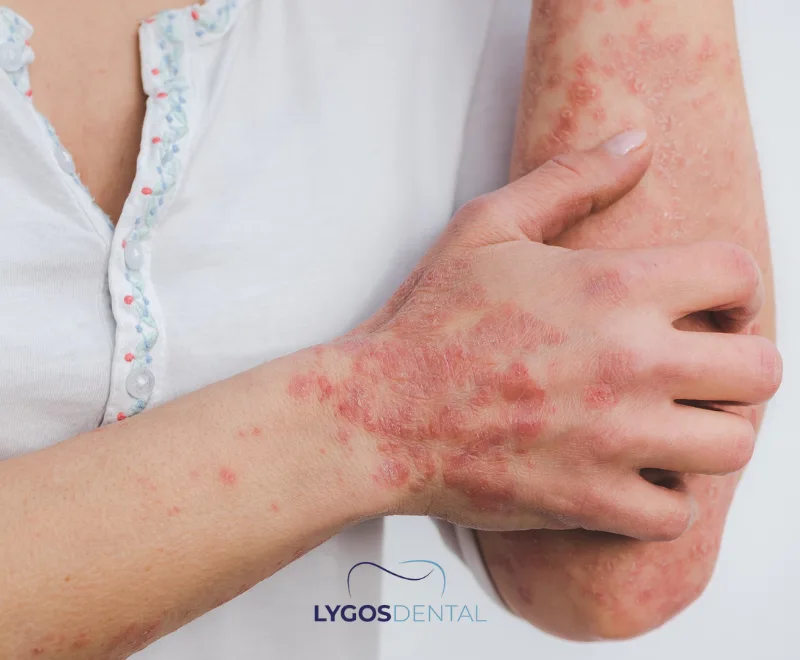
In a healthy immune system, immune cells identify and eliminate harmful threats such as bacteria and viruses. In autoimmune disease, that defense system misidentifies normal cells as “foreign” and creates inflammation that can damage organs and tissues.
Many autoimmune conditions can affect oral health directly (through inflammation of the oral mucosa) or indirectly (through dry mouth, medication effects, or systemic flare-ups).
Oral symptoms may involve the oral mucosa, lips, tongue, gums, and salivary glands. People often report one or more of the following:
Because these symptoms overlap with common issues such as stress, vitamin deficiencies, infections, and trauma, patterns matter. Ulcers that recur frequently, last longer than expected, or appear with other systemic symptoms deserve a clinical assessment.
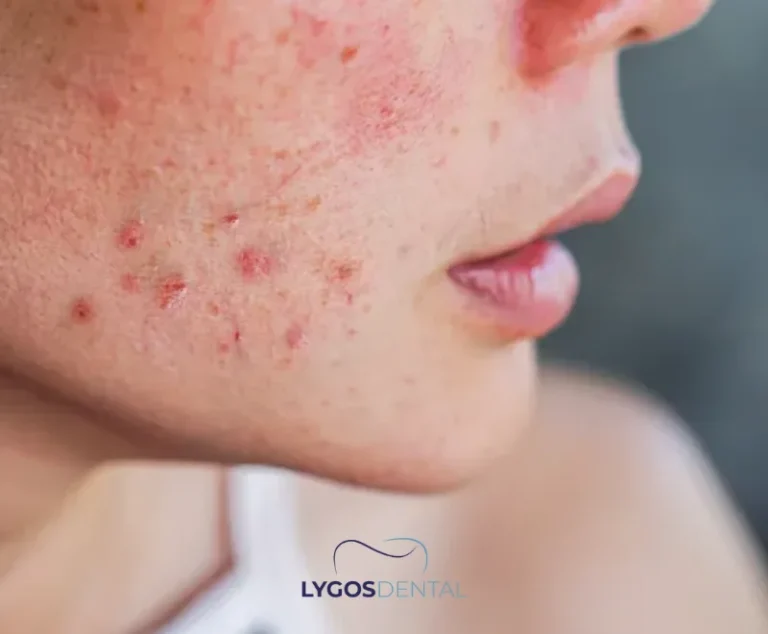
Behçet’s disease is a multisystem inflammatory condition in which recurrent oral ulcers are a hallmark feature. The ulcers are typically painful, may be multiple at once, and often return in cycles.
Lesions can occur anywhere in the mouth, including the lips, cheeks, tongue, and palate. When oral ulcers are deep and persistent—especially alongside genital ulcers, eye symptoms, or skin lesions—Behçet’s disease becomes an important consideration.
Lupus is a systemic autoimmune disease that can involve skin, joints, kidneys, blood, and the nervous system. Oral ulcers are common and may occur during periods of higher disease activity.
Classic lupus mouth ulcers often appear on the palate and can be red or white. They are sometimes painless, which means they may go unnoticed unless the mouth is examined carefully.
Sjögren’s syndrome affects the salivary and tear glands, leading to dry mouth and dry eyes. Reduced saliva changes the mouth’s natural protection against acids and microbes.
Dry mouth increases the risk of cavities, gum disease, oral yeast infections, and traumatic irritation from speaking, chewing, or dentures. Some people also notice tongue fissures, burning sensations, and difficulty swallowing dry foods.
Pemphigus vulgaris is an autoimmune blistering disease. In many patients, the first signs appear inside the mouth as fragile blisters that rupture quickly.
The result is widespread, painful erosions that can make eating and oral hygiene challenging. Prompt diagnosis and specialist treatment are important because symptoms can progress beyond the mouth.

These conditions can look similar at first glance, but their patterns help differentiate them in clinic.
In lupus, ulcers often involve the palate and may be painless. In Behçet’s disease, ulcers tend to be deeper, more painful, and strongly recurrent.
In Sjögren’s syndrome, dryness drives many of the problems—irritation, fissures, higher cavity risk, and recurrent infections—rather than a single “ulcer type”.
Treatment is tailored to the underlying diagnosis, the severity of symptoms, and how often lesions recur. The main goals are to reduce pain, speed healing, and prevent complications such as infection or tooth decay.
When oral lesions reflect active autoimmune disease, systemic therapy may be needed to control inflammation. Depending on the condition, clinicians may use corticosteroids, immunosuppressive medicines, or targeted biologic therapies.
Local care focuses on comfort and protecting the oral tissues. Options may include topical corticosteroid gels, antiseptic mouth rinses, and short-term anesthetic products.
For Sjögren’s-related dryness, saliva substitutes, moisturizing sprays, and strategies to stimulate saliva can help reduce irritation and lower cavity risk.
Simple changes often reduce flare-ups and make lesions less painful. Many patients do better when they avoid spicy or acidic foods during active sores and keep up with gentle, consistent oral hygiene.
If you smoke, stopping can improve healing and reduce irritation. Stress management can also help, as stress is a common trigger for recurrent mouth ulcers in general.
In many autoimmune conditions, oral lesions come and go in flares rather than remaining permanently. Behçet’s disease is well known for recurrent oral ulcers, while lupus mouth ulcers often correlate with disease activity.
In Sjögren’s syndrome, the dryness can be long term, which means the downstream risks—cavities, gum disease, and chronic irritation—may persist without ongoing prevention and dental follow-up.
Seek evaluation if mouth ulcers recur frequently, last longer than two weeks, or are accompanied by fever, weight loss, rashes, joint pain, eye symptoms, or genital ulcers.
Urgent care is appropriate if you cannot drink enough fluids, pain is severe, or there are signs of infection such as spreading redness, pus, or a high fever.
Behçet’s, lupus, pemphigus, and oral lichen planus can cause mouth lesions.
Lupus, rheumatoid arthritis, Sjögren’s, and autoimmune thyroid disease often cause extreme fatigue.
No diet reliably reverses autoimmune disease; Mediterranean-style diets can reduce inflammation and symptoms.
See your clinician; treat the disease, use topical steroids, and avoid triggering foods.
None is universally hardest; lupus and vasculitis are often difficult due to variability.
