
Jul 3, 2025
Laminate Veneer Prices
In this article, we’ll cover laminate veneer prices, the application process, advantages, and the key factors…
A permanent tooth can sometimes erupt behind a baby tooth before the baby tooth loosens. This “double row” (often called “shark teeth”) is usually caused by a baby tooth that hasn’t shed on time. Many cases self-correct as the baby tooth falls out, but a dentist should check for crowding, hygiene problems, or a bite issue.
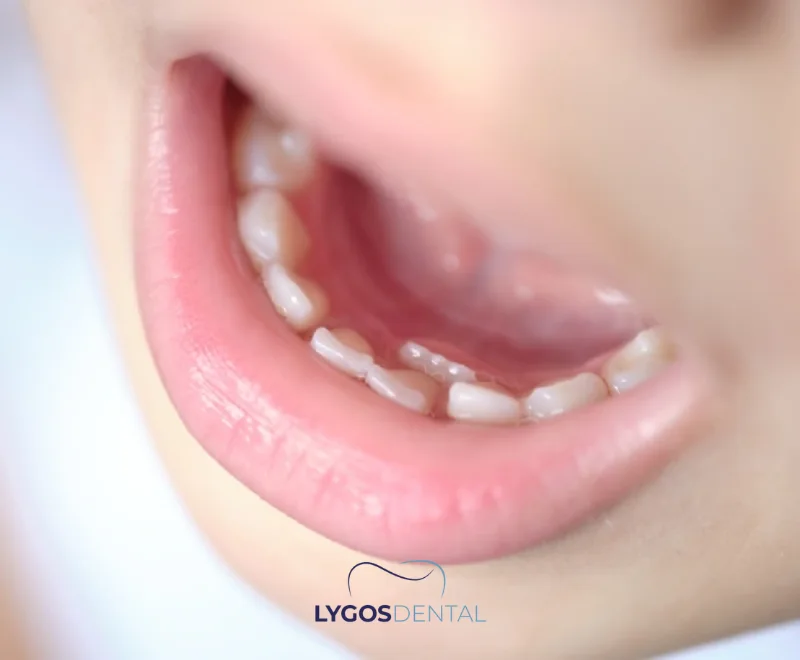
When a permanent tooth appears while the baby tooth is still in place, you may see two rows of teeth. Dentists often describe this as a retained baby tooth with an erupting permanent tooth; many parents know it as “double row teeth” or “shark teeth.” It is common around the lower front teeth, but it can happen anywhere in the mouth.
Most children get their first baby teeth around 6 months of age, and the full set of 20 baby teeth is usually in place by about 2–3 years old. Permanent teeth commonly begin to come in around age 6 and continue to replace baby teeth through the early teen years. Because every child develops at a slightly different pace, the exact timing can vary.
In many cases, the permanent tooth is on schedule, but the baby tooth is not loosening as expected. Here are the most common reasons dentists see:
Eruption patterns often run in families. Some children naturally shed baby teeth later, even when the permanent tooth is ready to erupt.
If the root of the baby tooth does not dissolve on time, the tooth may stay firm in place. The permanent tooth then takes the path of least resistance and can come in behind or in front of it.
Cavities or past injury can change how a baby tooth behaves as the permanent tooth approaches. A damaged baby tooth may become unstable, or swelling may alter the eruption path.
If there is not enough room, the permanent tooth may erupt out of line. Crowding is one reason the new tooth may appear behind the baby tooth instead of pushing it out normally.
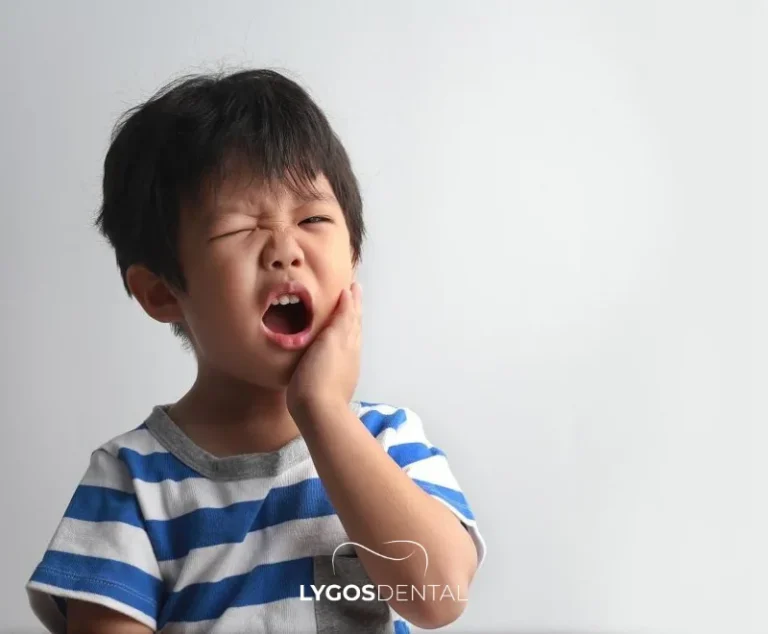
A second tooth peeking through behind the baby tooth is the classic sign. You may also notice crowding, a tooth that looks rotated, or a baby tooth that does not wiggle even though a new tooth is visible. Mild tenderness can occur during eruption, but significant pain, swelling, or fever should be checked promptly.
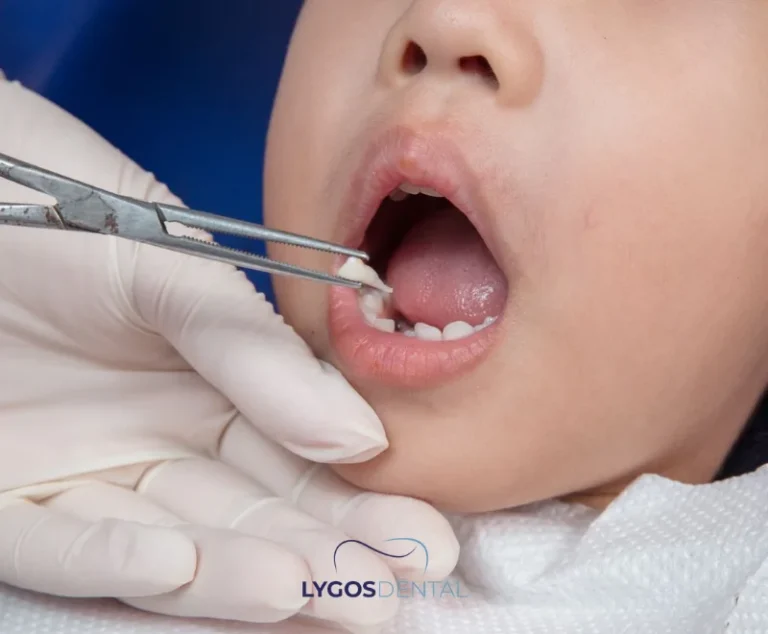
Some children will self-correct once the baby tooth finally falls out, especially if there is good space in the arch. If the baby tooth stays put, the permanent tooth can drift into the wrong position and make future alignment more difficult. Two rows of teeth can also trap food, raising the risk of cavities and gum irritation.
Treatment depends on the child’s age, how loose the baby tooth is, and whether the permanent tooth has room to move into place. A dentist may take an X‑ray to confirm the position of the teeth and the root of the baby tooth.
If the baby tooth is already loose and there is space, the dentist may simply monitor it. Once the baby tooth comes out, the tongue and normal chewing forces often help guide the permanent tooth forward over time.
If the baby tooth is not loosening and it is blocking the permanent tooth, extraction may be recommended. This can reduce the chance of long‑term crowding and helps the permanent tooth move into a healthier position.
If crowding is significant or the bite is affected, the dentist may refer your child for orthodontic evaluation. Early interceptive treatment can sometimes create space and reduce the need for more complex treatment later.
Keep brushing twice a day and pay extra attention to the area where the new tooth is erupting, since food can collect easily. If your child can floss, flossing between crowded teeth helps prevent cavities. Avoid wiggling a firm baby tooth aggressively; let a dentist decide when it is ready to come out.
Schedule an appointment if a permanent tooth is visible and the baby tooth is not loose, or if the tooth looks far out of line. Also seek care if there is swelling, persistent pain, bad taste, or bleeding gums. Early assessment is the best way to prevent crowding and protect the new permanent tooth.
Yes, it’s common; permanent teeth may erupt before baby teeth shed (“shark teeth”).
It can cause double-row teeth and crowding; a dentist may remove the baby tooth.
It means first teeth around 7 months, then about four new teeth every 4 months.
Encourage wiggling if loose; otherwise see a dentist for possible baby-tooth extraction.
Up to age 12 is common; beyond that, evaluate for impaction or missing permanent tooth.
Early eruption can be familial or linked to early baby-tooth loss, trauma, or endocrine disorders.
