
How to Perform Tartar Cleaning?
What is tartar?
Tartar, also called dental calculus, forms when plaque mineralizes and hardens on the tooth surface. It can build up above the gumline and below it, where it may contribute to gum inflammation. Because tartar has a rough surface, it attracts more plaque and can make teeth look yellow or brown.
Why tartar forms
Tartar usually develops when plaque isn’t removed regularly and has time to harden. Some people also form tartar faster due to saliva composition, diet, or habits. Reducing risk comes down to consistent daily care and routine professional cleanings.
Common risk factors include:
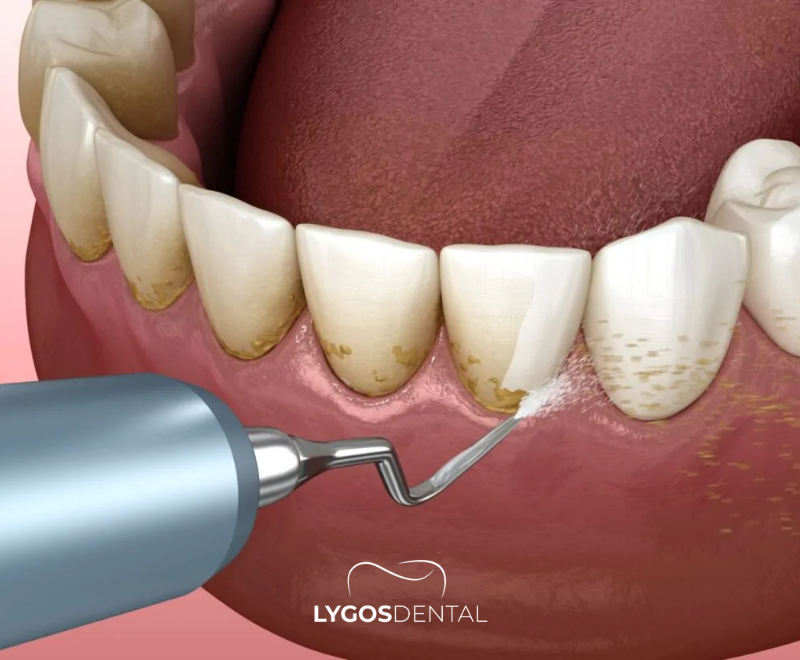
Table of Contents
Can you remove tartar at home?
Once plaque turns into tartar, it becomes tightly attached to the tooth and can’t be removed effectively with a toothbrush or floss. Trying to scrape it off at home can damage enamel or irritate the gums. If you notice hard deposits or bleeding gums, the safest option is a professional dental cleaning.
How professional tartar cleaning is performed
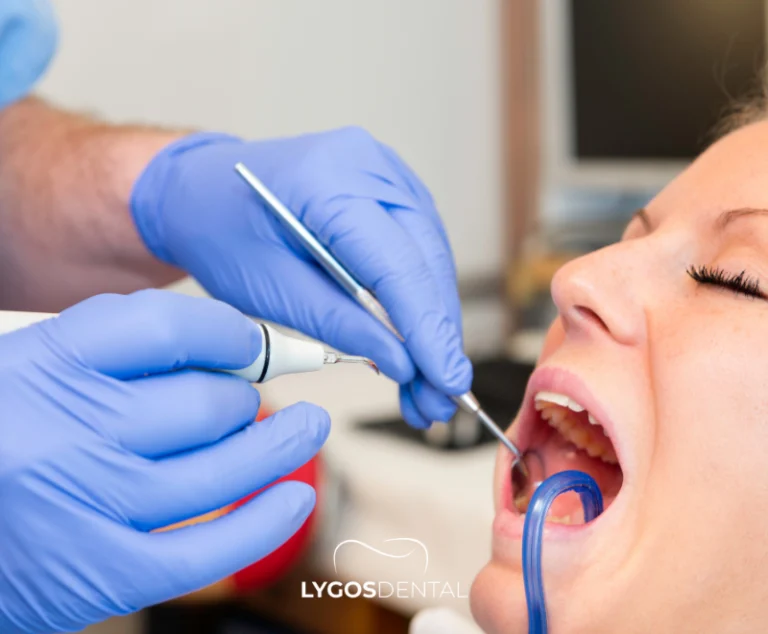
Professional tartar cleaning (scaling) is designed to remove calculus from tooth surfaces and, when needed, from below the gumline. The exact approach depends on how much tartar you have and whether there are signs of gum disease.
Typical steps include:
- Examination: The dentist or hygienist checks for tartar, gum inflammation, and areas that may need deeper cleaning.
- Ultrasonic scaling: An ultrasonic scaler uses vibrations and water to break up and flush away tartar.
- Hand scaling: Manual instruments remove remaining deposits and refine hard-to-reach areas.
- Polishing: Teeth are polished to smooth the surface and help reduce new plaque retention.
- Fluoride (optional): Fluoride may be applied to strengthen enamel and reduce sensitivity.
Aftercare tips
Some sensitivity is normal for a short time after scaling, especially if there was heavy tartar or gum inflammation. A few simple habits can help you stay comfortable and protect your gums while they settle.
- Avoid very hot or very cold foods for a few hours if you feel sensitive.
- Skip hard, very acidic, or very spicy foods for the first day if your gums are tender.
- Use a soft-bristled toothbrush and brush gently along the gumline.
- If recommended by your dentist, use a desensitizing toothpaste or mouthwash.
- Avoid smoking and tobacco products, which can slow gum healing.
How to prevent tartar buildup
Prevention is mainly about stopping plaque before it hardens. A consistent routine makes the biggest difference, especially cleaning between teeth where tartar often starts.
- Brush twice a day for two minutes using fluoride toothpaste.
- Clean between teeth daily (floss, interdental brushes, or water flosser).
- Rinse with an antiseptic or fluoride mouthwash if it suits your needs.
- Limit frequent snacking on sugary foods and reduce acidic drinks.
- Drink water throughout the day, especially after meals.
- Book routine dental check-ups and cleanings as advised.

Tartar cleaning costs in Turkey
Costs vary by city, clinic, and whether the cleaning is routine or involves deeper periodontal care. As a reference point, the Turkish Dental Association guide tariff lists detartraj (tartar cleaning) at 3,000 TL excluding VAT (3,300 TL including VAT) for a single jaw. Your final fee may be higher if additional procedures are needed.
FAQ
How is tartar cleaning done?
Dental tartar cleaning is done by a dentist using ultrasonic scaling and hand instruments.
How do you remove hardened tartar?
Hardened tartar is removed with professional scaling and, if needed, root planing.
Can I scrape tartar off my teeth myself?
No; scraping tartar yourself can damage enamel and gums and may miss deposits.
Does vinegar dissolve tartar?
No; vinegar cannot reliably dissolve tartar and may erode tooth enamel.
Will teeth fall out if tartar is removed?
Usually no; removing tartar reduces disease, but loose teeth reflect prior damage.
When is it too late to remove tartar?
Rarely; remove tartar anytime, but advanced periodontal disease needs urgent specialist treatment.