
Porcelain vs Laminate Veneers | LYGOS DENTAL
Porcelain Vs Laminate Veneers
Porcelain laminate veneers are ultra-thin porcelain shells bonded to the front of teeth with minimal enamel removal, best for small changes in color, shape, or gaps. Traditional porcelain veneers are slightly thicker and usually need more preparation, making them better when teeth require stronger masking or reshaping. A dentist’s exam determines the safest, most natural option.
Table of Contents
Understanding the two options
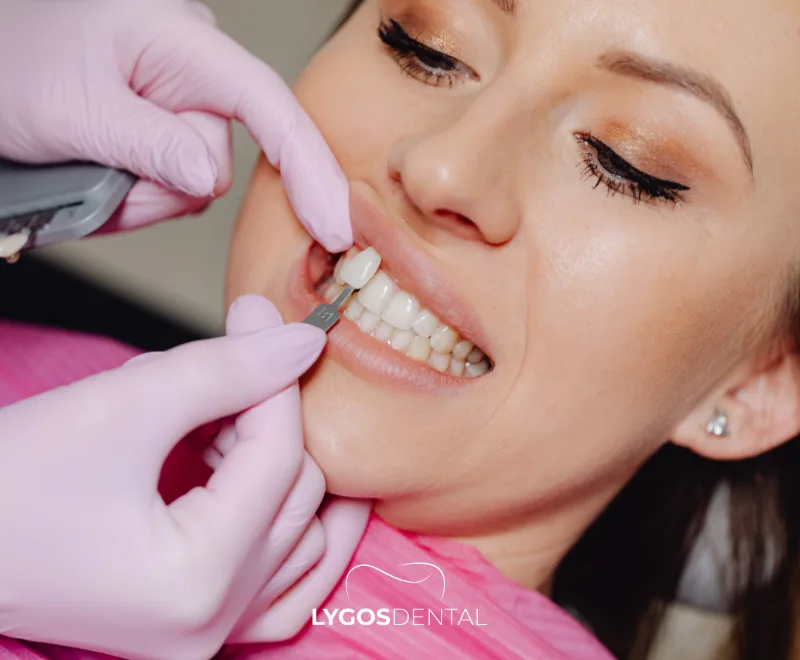
Veneers are custom-made porcelain restorations designed to improve the visible (front) surface of teeth. They can change color, shape, and the way teeth line up when orthodontics is not required. Within porcelain veneers, dentists often distinguish between porcelain laminate veneers (very thin) and traditional porcelain veneers (thicker).
What are porcelain laminate veneers?
Porcelain laminate veneers—sometimes called “porcelain laminates” or “leaf veneers”—are thin shells usually around 0.3–0.7 mm. They are bonded to the front surface of the tooth, so preparation is often minimal and limited to the enamel. They work well for mild discoloration, small chips, tiny gaps, and subtle shape corrections, especially on front teeth.
What are traditional porcelain veneers?
Traditional porcelain veneers are still bonded to the front of the tooth, but they are typically thicker than laminates. Because they can mask darker discoloration and reshape teeth more, they often require slightly more enamel reduction. They are commonly chosen when teeth need stronger color coverage, more contour change, or added strength at the edge.
Note: A restoration that covers the entire tooth is usually called a crown, not a veneer. Full-coverage crowns may be recommended for heavily broken-down teeth or after root canal treatment, while veneers are usually reserved for teeth where most structure is still healthy.
Key differences between laminate and porcelain veneers
| Factor | Porcelain laminate veneers | Traditional porcelain veneers |
| Coverage | Front surface only | Front surface only |
| Typical thickness | About 0.3–0.7 mm | Often thicker than laminates |
| Tooth preparation | Minimal enamel reduction in many cases | Usually more reduction to create space and strength |
| Best for | Minor shape tweaks, small gaps, mild to moderate color issues | Stronger masking, bigger shape changes, worn edges |
| Strength & chipping risk | Very aesthetic; may be more sensitive to biting forces | Generally more robust due to thickness |
| Treatment timeline | Commonly 2–3 appointments | Commonly 2–3 appointments |
Your dentist will also consider bite forces, existing fillings, enamel quality, and habits like teeth grinding when recommending a veneer type.
Similarities
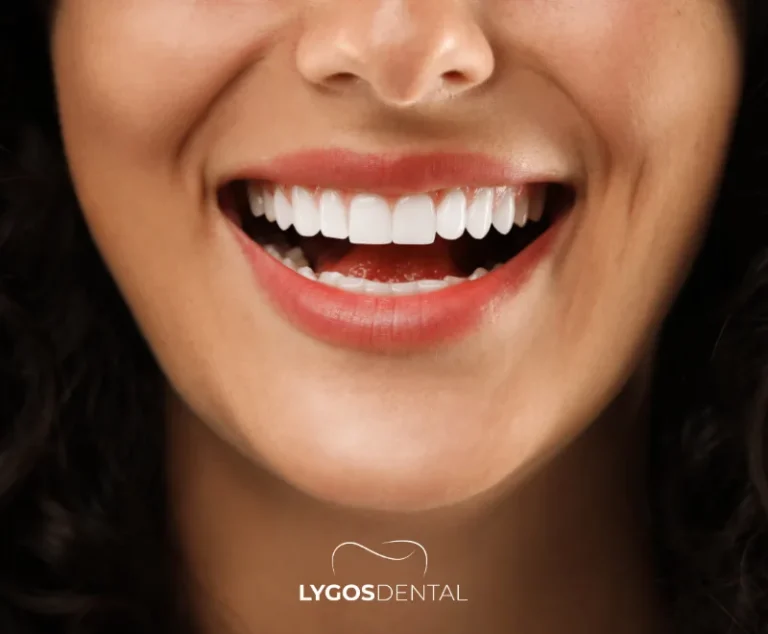
Despite the differences, both options share the same core benefits when planned and bonded correctly.
- They improve tooth color, shape, and symmetry with a natural look.
- Porcelain is color-stable and more stain-resistant than natural enamel.
- They are biocompatible and typically gentle on gums when margins are well-finished.
- With good home care and regular check-ups, they can last for many years.
Lifespan and long-term care
Longevity depends more on technique and habits than on the veneer label. Many clinicians quote roughly 7–12 years for laminate veneers and 10–15 years for traditional porcelain veneers, but real-world outcomes vary widely. Night-time grinding, biting hard foods, and skipping dental visits are common reasons veneers fail early.
- Brush twice daily and clean between teeth to protect gum health around the margins.
- Avoid cracking shells, ice, or hard candy with veneered teeth.
- If you clench or grind, ask about a custom night guard.
- Schedule professional check-ups every 6 months, or as advised.
Cost considerations in Turkey (2026)
Veneer pricing varies by clinic and case complexity, so it’s best discussed after an exam and smile design plan. In Turkey, the total fee is usually influenced by the laboratory used, the dentist’s experience, the number of teeth treated, materials selected, and whether additional work is needed (such as gum contouring or replacing old fillings). Choosing the right indication matters more than choosing the lowest price, because an unsuitable veneer plan can shorten lifespan.
Which option is best?
There isn’t a universal “better” choice. The right veneer is the one that fits your enamel, bite, and aesthetic goals.
- Laminate veneers: often ideal when teeth are mostly healthy and you want small, natural-looking improvements.
- Traditional porcelain veneers: often better when you need stronger color masking, more reshaping, or reinforcement of worn edges.
- Crowns (full coverage): considered when the tooth is structurally compromised and needs complete protection.
Get information or book an appointment
To learn more about cosmetic dentistry, dental crowns, dental implants, or general dentistry, contact the clinic to schedule an appointment and discuss your options.
FAQ
Are laminate veneers better than porcelain?
Neither; the best choice depends on your teeth, goals, and enamel preservation.
Which veneers look the most natural?
Porcelain veneers, especially lithium disilicate, look the most natural.
What is the disadvantage of porcelain veneers?
Irreversible enamel removal and higher cost are key disadvantages of porcelain veneers.
Which type of veneer lasts the longest?
Porcelain veneers usually last the longest with strong bonding to enamel and good care.
What happens 10 years after getting veneers?
Many veneers still work at 10 years, but some need replacement from wear or decay.