
Teeth Whitening Pen
Teeth Whitening Pen
Teeth whitening pens are small brush-on gels that can brighten mild surface stains on natural teeth when used as directed. Most people see subtle changes after several days, with best results in 1–2 weeks. Results aren’t permanent and can fade if you regularly drink coffee, tea, or wine.
What Is A Teeth Whitening Pen?
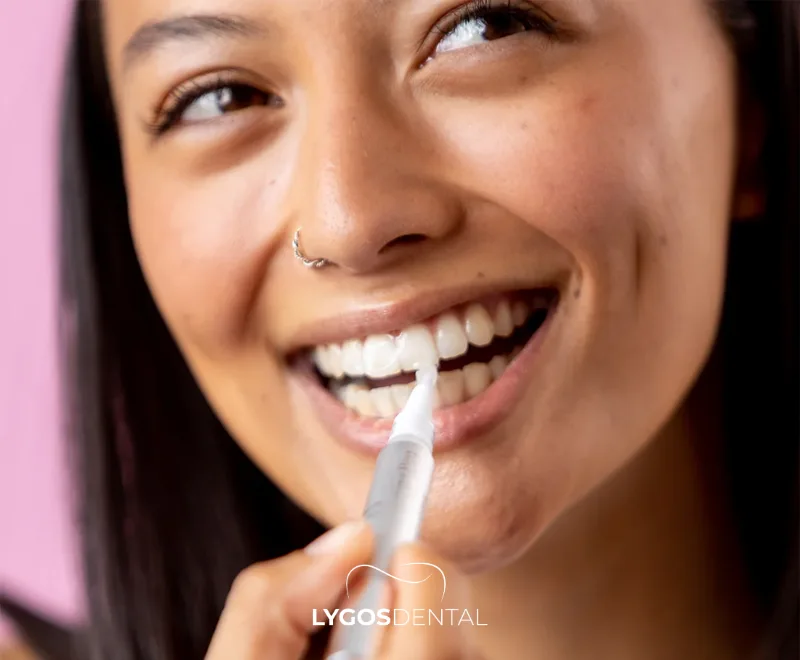
A teeth whitening pen is a slim, travel-friendly applicator filled with whitening gel. Most formulas use hydrogen peroxide or carbamide peroxide, which are common whitening agents in at-home products. You paint a thin layer of gel directly onto the front surfaces of your teeth, then let it set.
How Teeth Whitening Pens Work
Whitening gels work by breaking down stain compounds so teeth look brighter. Pens tend to deliver a smaller amount of gel and shorter contact time than trays or in-office treatments, so results are usually modest. They’re best for mild yellowing and everyday surface stains from foods and drinks.
Whitening pens only change the color of natural tooth enamel. They won’t lighten crowns, fillings, veneers, or bonding, and they may make color differences more noticeable if you have dental work on front teeth.
How To Use A Teeth Whitening Pen

Exact instructions vary by brand, so follow the label first. These steps cover the usual process and help you get more even results.
- Clean your teeth: Brush and floss (or rinse well) so the gel contacts the tooth surface, not plaque or residue.
- Dry the front teeth: Use a clean tissue or cotton pad to gently dry the teeth you plan to whiten. A drier surface helps the gel stay in place.
- Dispense a small amount: Twist, click, or squeeze the pen until a little gel appears on the brush tip.
- Apply a thin layer: Paint a light, even coat on the front surfaces of the teeth you show when you smile. Avoid the gums and lips.
- Let it set: Keep lips off your teeth while the gel dries. Many pens set in under a minute, but use the timing on your product.
- Avoid food and drinks briefly: Skip eating or drinking for about 30–60 minutes (or as directed) so the gel can do its job.
Most brands suggest using a pen once or twice daily for 1–2 weeks. Using it more often than recommended can increase sensitivity without improving results.
How Long Until You See Results?
Some people notice a small change after a few uses, especially if stains are mostly on the surface. For many users, the most noticeable improvement happens after 1–2 weeks of consistent application. If you don’t see any change after the full recommended course, the discoloration may be deeper and less responsive to pen-style products.
Results depend on things like:
- How dark the stains are and whether they’re surface stains or deeper discoloration
- How often you drink staining beverages like coffee, tea, or red wine
- Whether you smoke or vape nicotine products
- The strength of the whitening agent and how long it stays on the teeth
- How closely you follow the product directions
How Long Do Results Last?
Whitening from a pen is not permanent. Teeth can pick up new stains over time, and the brightness you gain may fade over days or weeks depending on your habits. Many people use pens for occasional touch-ups rather than ongoing daily use.
To help results last longer:
- Limit staining foods and drinks when possible, or rinse with water after having them
- Use a straw for iced coffee, tea, or colored drinks to reduce contact with front teeth
- Wait at least 30 minutes after acidic foods before brushing to protect enamel
- Keep up with daily brushing and flossing, plus regular dental cleanings
Pros And Cons Of Teeth Whitening Pens
Pros:
- Quick, simple application with minimal setup
- Portable and easy to carry for travel or events
- Lower cost than professional whitening
- Useful for touch-ups between cleanings or treatments
Cons:
- Results are usually subtle and temporary compared with trays or in-office whitening
- May trigger tooth sensitivity or mild gum irritation, especially if overused
- Not effective on crowns, veneers, fillings, or severe discoloration
- Uneven results are possible if gel touches gums or is applied inconsistently
Common Mistakes To Avoid
- Skipping brushing first: Gel works best on clean enamel, not on plaque or residue.
- Applying on wet teeth: Saliva can dilute the gel and make it slide around.
- Using too much product: A thick layer doesn’t whiten faster and can irritate gums.
- Letting gel hit the gums: Peroxide can cause temporary whitening or burning of soft tissue.
- Eating or drinking right away: Give the product time to sit so you don’t wash it off immediately.
- Overusing for “faster” results: More frequent use can increase sensitivity and doesn’t always improve whitening.
- Storing it in heat: Heat can affect the gel’s stability; keep it sealed in a cool, dry place.
Safety, Sensitivity, And Who Should Avoid Whitening Pens

When used as directed, whitening pens are generally considered safe for many adults. The most common side effect is temporary tooth sensitivity, which can happen because peroxide passes through enamel and irritates the tooth’s inner layer. Mild gum irritation can also happen if gel touches the soft tissue.
To reduce sensitivity:
- Use the pen less often or stop for a day or two if sensitivity builds
- Apply a thinner layer and avoid the gumline
- Use toothpaste for sensitive teeth and a soft-bristled brush
- Avoid very hot or cold foods for a day if your teeth feel reactive
Talk to a dentist before whitening if you have untreated cavities, gum disease, worn enamel, recent dental work on visible teeth, or persistent sensitivity. Whitening is also typically not recommended for children and should be discussed with a dentist during pregnancy or breastfeeding.
Teeth Whitening Pen FAQ
Are teeth whitening pens safe?
They can be safe for many adults when used exactly as directed and purchased from reputable brands. If you have dental pain, active gum problems, or very sensitive teeth, get advice from a dentist first.
Do teeth whitening pens cause sensitivity?
They can. Sensitivity is usually temporary and often improves when you reduce frequency or pause treatment. If sensitivity is strong or lasts more than a few days after stopping, see a dentist.
Do teeth whitening pens work on all teeth?
They work on natural teeth, mainly for mild surface staining. They do not whiten crowns, veneers, fillings, or bonding, and they may not help with deep gray or brown discoloration.
How often should you use a whitening pen?
Most products recommend once or twice daily for about 1–2 weeks, then occasional touch-ups. Don’t exceed the schedule on the label.
Can children or pregnant women use teeth whitening pens?
They’re usually not recommended for children. If you’re pregnant or breastfeeding, it’s best to check with your dentist before using any whitening product.
When To See A Dentist Instead
Consider a dental check before whitening if you have:
- Tooth pain, visible cavities, or broken fillings
- Bleeding gums, swelling, or signs of gum disease
- Dark gray, blue, or banded discoloration that may be internal
- Crowns or veneers on front teeth and you want an even color match
- Sensitivity that doesn’t settle after reducing or stopping whitening