
Jul 30, 2025
Splint Prices for Teeth Grinding (Bruxism)
One effective treatment method is the use of a splint, which helps manage and control the…
A tetracycline tooth stain is a type of intrinsic tooth discoloration that forms when tetracycline-class antibiotics are taken while teeth are developing (during pregnancy or early childhood). The drug binds to mineralizing tooth tissue, leaving yellow, gray, brown, or blue bands that brushing can’t remove. Cosmetic dentistry can usually improve the appearance.
Tooth color changes can come from foods, smoking, trauma, aging, or certain medications. Tetracycline staining is different because it forms inside the tooth rather than sitting on the surface. That’s why a typical cleaning or whitening toothpaste won’t make it disappear.
Tetracyclines are a family of broad-spectrum antibiotics used to treat a range of bacterial infections. Common examples include tetracycline, doxycycline, and minocycline. They’re prescribed for conditions such as acne, respiratory infections, some skin infections, and certain tick-borne illnesses.
These antibiotics have a strong attraction to calcium. When teeth are forming, tetracyclines can become incorporated into the developing enamel and dentin. Over time, the trapped compounds can darken, especially with light exposure, creating a stain that’s built into the tooth structure.
Tetracycline-related discoloration often appears as yellow, brown, gray, or blue tones. Some people notice horizontal bands across the teeth, while others see a more even, generalized change in shade. The exact color and pattern depend on the type of antibiotic, the dose, and the stage of tooth development at the time of exposure.

Tetracyclines can cross the placenta. If taken during the later stages of pregnancy—when a baby’s primary teeth and the early parts of permanent teeth are mineralizing—staining can occur. For this reason, tetracyclines are usually avoided during pregnancy unless a clinician determines the benefits clearly outweigh the risks.
The highest risk is in young children because many permanent teeth are still developing. When tetracycline-class antibiotics are used during this window, the discoloration can affect both baby teeth and the adult teeth that erupt later. In practice, clinicians usually choose other antibiotics for routine infections in this age group.
Most adults won’t develop classic tetracycline banding because their teeth have already formed. That said, minocycline—especially with long-term use—has been linked to staining in erupted teeth and gum tissue in some patients. If you notice new discoloration while taking a tetracycline for acne or another condition, ask your prescriber and dentist about alternatives.
In many cases, yes. Because the discoloration sits inside the tooth, brushing, polishing, and most over-the-counter products won’t remove it. The good news is that modern cosmetic dentistry can often lighten or fully mask the stain, depending on its depth and color.
A dentist will usually start by checking for cavities, enamel defects, and gum health, then match treatment to the stain’s severity. Mild yellow or light brown staining may respond to conservative options, while gray or blue tones often need coverage-based solutions. Sometimes, combining treatments gives the most natural result.
In-office bleaching and dentist-supervised at-home trays can help with mild to moderate staining. Results tend to be better for yellow-brown discoloration than for deep gray-blue tones. Whitening may take longer than usual, and sensitivity management is part of the plan.
Composite bonding uses tooth-colored resin to cover discoloration and refine tooth shape. It can be a good option for smaller areas or as a budget-friendly cosmetic fix. Bonding is less durable than porcelain and may need maintenance over time.
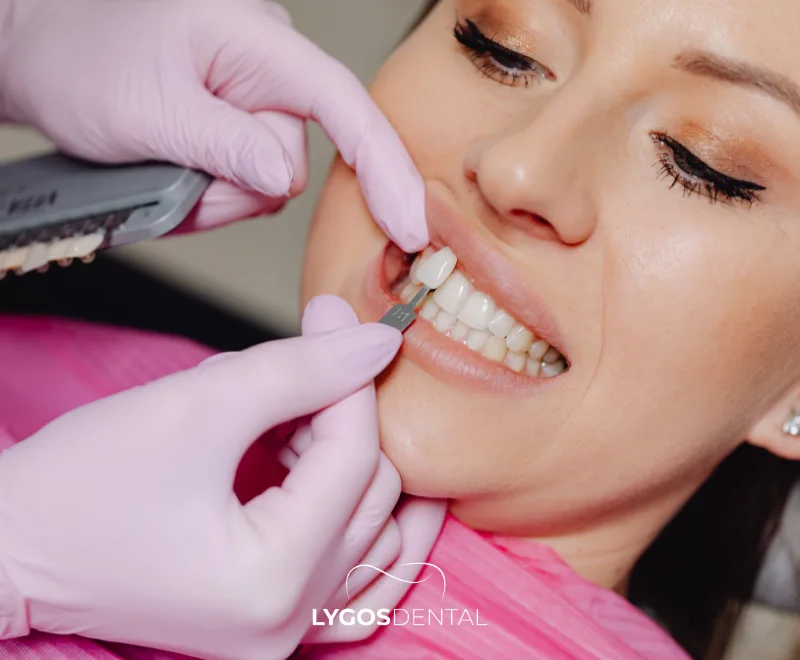
Veneers are thin porcelain shells bonded to the front surfaces of teeth. They can reliably mask moderate to severe tetracycline staining, especially when banding is visible on the front teeth. A careful shade plan is essential so the veneers look bright without appearing opaque.
When discoloration is severe or the tooth also needs structural repair, a crown may be the best choice. Materials such as zirconia or porcelain-fused options can block dark internal color while restoring strength. Crowns require more tooth reduction than veneers, so dentists reserve them for the right clinical situations.
Prevention is mainly about timing and medication choice:
Book an appointment if you see banding, gray-blue discoloration, or uneven tooth color that doesn’t improve with routine cleaning. A dentist can confirm whether the stain is internal, rule out other causes, and explain realistic outcomes for each treatment option. Photos and shade tracking are often helpful when planning whitening, veneers, or crowns.
It’s an internal (intrinsic) discoloration that forms when tetracycline-class antibiotics are taken while teeth are developing. The stain becomes part of the tooth structure, which is why brushing cannot remove it.
They typically don’t. Some teeth may look darker over time, especially with light exposure and natural aging. Cosmetic treatment is usually needed to noticeably change the appearance.
Whitening can help in mild cases, but deep gray or blue discoloration often responds poorly. Many people get the best results with whitening plus veneers or bonding, depending on the tooth and the shade.
The risk is highest when tetracycline antibiotics are used during tooth development. Certain drugs in this family, such as minocycline, have also been linked to staining in erupted teeth with long-term use.
Shades range from yellow and brown to gray or blue. The pattern may be uniform or appear as horizontal bands across the teeth.
