
Dec 16, 2025
Hacks: Forgot Your Toothpaste, Now What?
So, how does tooth loss affect speech? In this article, we will examine in detail the…
Teeth stain when pigments from food, drinks, and tobacco cling to the enamel, or when changes happen inside the tooth, such as medication-related discoloration, fluorosis, trauma, or natural enamel thinning with age. Surface stains often improve with professional cleaning or whitening, while deeper stains may need cosmetic dental treatment.
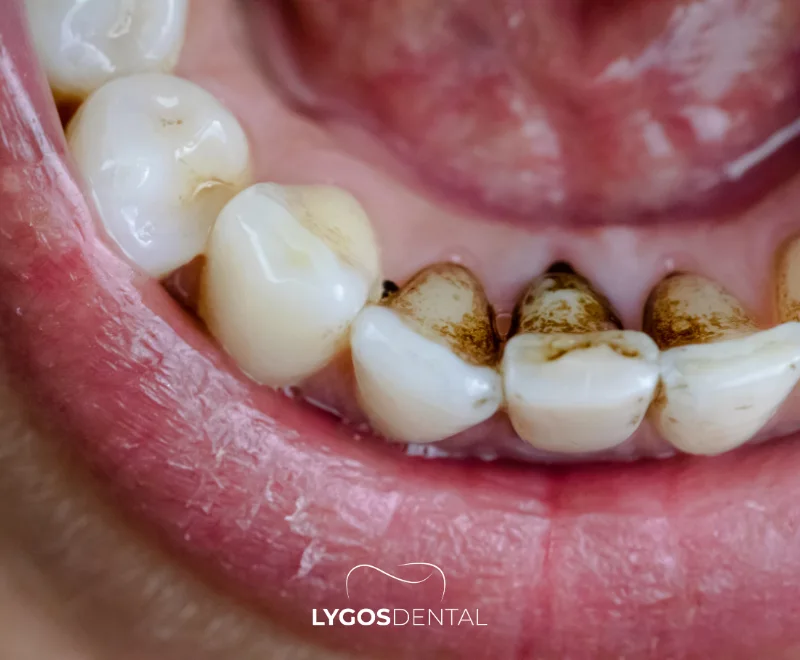
A tooth stain is a change in tooth color that affects the enamel surface or the layers beneath it. Stains can look yellow, brown, gray, or almost black, and they may appear evenly or as patches. Some discoloration is purely cosmetic, but sudden or uneven changes can also point to enamel wear or decay.
Most staining falls into two categories: extrinsic (on the surface) and intrinsic (within the tooth). Understanding the difference helps you choose the right solution and avoid wasting money on treatments that won’t work for your stain type.
Extrinsic stains sit on the enamel and are usually linked to daily habits. Dark beverages and tobacco are the usual culprits, but heavily pigmented foods can contribute too. These stains often respond well to professional cleaning and dentist-supervised whitening.
Intrinsic stains form below the enamel, inside the tooth structure. They may appear as overall darkening, gray tones, or bands, and they typically don’t lift with over-the-counter whitening products. A dentist can confirm the cause and recommend options such as internal bleaching, bonding, veneers, or crowns.
The color and pattern can give clues about the cause, although a dental exam is the best way to confirm it.
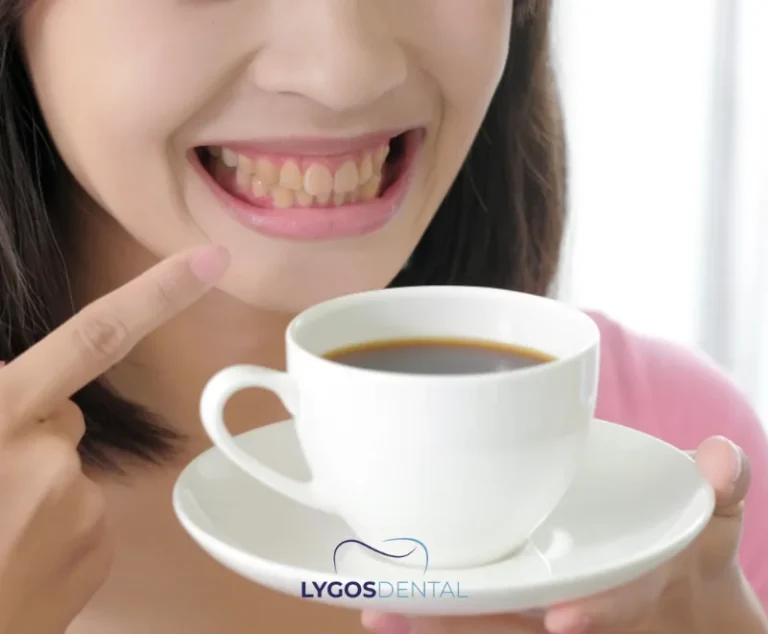
Tea and coffee contain tannins that help pigments stick to enamel. Over time, those pigments build up, especially in grooves and between teeth. Tobacco stains tend to be tougher because tar and nicotine form a sticky film that attracts more discoloration and plaque.
Some stains are temporary, while others are stubborn. Surface stains are often removable with a professional scale and polish, and many people see additional improvement with dentist-supervised whitening. Intrinsic stains can be long-lasting, but cosmetic dentistry offers effective ways to mask or correct them.
Prevention is usually easier than reversal. A few consistent habits can reduce staining without changing your diet dramatically.

The best treatment depends on whether the stain is surface-level or internal. If you’re unsure, a quick dental check can prevent wasted time and sensitivity from unnecessary whitening products.
Usually not. Some mild surface discoloration can fade if you stop the habit causing it, but most stains need cleaning or whitening to improve.
Common reasons include plaque buildup, certain medications, and fluoride exposure while teeth are developing. A pediatric dentist can identify the cause and advise safe treatment.
Stains don’t directly create cavities. Still, the buildup that causes staining—like plaque—can raise the risk of decay if it isn’t removed regularly.
No. Acid and abrasives can wear enamel, increase sensitivity, and make teeth look more yellow over time. Dentist-guided options are safer and more reliable.
Coffee, tea, red wine, cola, berries, and richly colored sauces are frequent causes. Consuming them less often, rinsing with water, and keeping up with cleanings can make a noticeable difference.
