
Sep 5, 2025
What Is Good for Dry Mouth? | LYGOS DENTAL
So, what is good for dry mouth? In this article, you will find everything from what…
Zirconia crowns fully cover a tooth to restore strength and appearance, while porcelain veneers bond to the front surface to improve colour, shape, or minor chips. Crowns suit weakened or heavily restored teeth; veneers suit mostly healthy teeth needing cosmetic refinement. The right choice depends on bite forces, tooth condition, and budget.
Both treatments can transform a smile, but they solve different problems. A crown is a full-coverage restoration. A veneer is a thin facing designed mainly for cosmetic change.
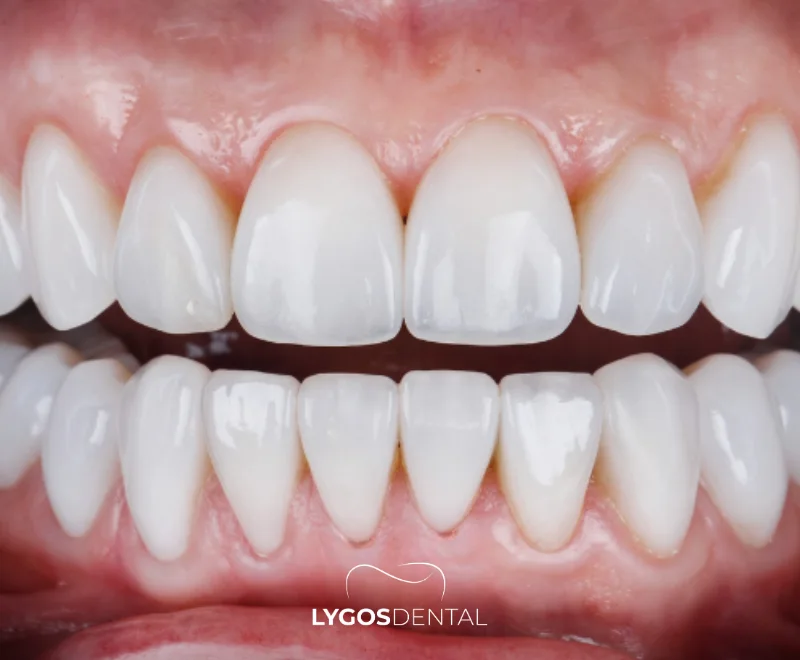
A zirconia (sometimes called “zirconium”) crown is a tooth-coloured ceramic cap made from zirconium dioxide. It’s designed to restore a tooth that is cracked, heavily filled, worn down, or treated with a root canal. Because it encases the tooth, it can handle higher chewing forces than most cosmetic-only options.
A porcelain veneer is a thin ceramic shell bonded to the front of a tooth. Dentists use veneers to adjust colour, close small gaps, correct minor shape issues, or mask small chips. Veneers work best when the underlying tooth is healthy and there’s enough enamel for strong bonding.
Crowns are restorative and protective because they cover the entire tooth. Veneers are primarily cosmetic because they cover only the visible front surface. If a tooth is structurally compromised, a crown is usually the safer long-term option.
Zirconia is known for high strength, which makes zirconia crowns a popular choice for molars and for patients who bite hard. Porcelain veneers are strong for a thin restoration, but they can chip if exposed to heavy forces, nail-biting, or untreated grinding.
Both can look natural when shade, shape, and texture are handled well. Veneers are often chosen for front-tooth makeovers because the ceramic can mimic enamel’s depth and gloss. Modern zirconia can also be highly aesthetic, especially when layered or carefully characterised.
Crowns usually require more tooth reduction than veneers because they must fit around the tooth. Veneers are more conservative, but most porcelain veneers are still considered permanent because a thin layer of enamel is commonly removed. Some “no-prep” or minimal-prep options exist, though they are not suitable for every case.
Zirconia crowns are metal-free and commonly used when patients want to avoid a dark gumline that can occur with metal-backed restorations. Gum health still depends on accurate fit, clean margins, and home care, regardless of material.
Pricing varies by country, clinic location, lab work, material choice, and how complex your bite and smile design are. As a rule, full-coverage restorations and advanced ceramics tend to cost more than simpler cosmetic solutions. The most accurate quote comes after an examination and a clear treatment plan.
Longevity depends on oral hygiene, diet, bite forces, grinding, and the precision of the fit. Regular check-ups help catch issues like cement wear, gum inflammation, or bite changes early.
Typical ranges you’ll see in clinical guidance and patient information:
A dentist will base the recommendation on tooth health, enamel availability, bite pattern, and your aesthetic goals. These general pointers can help you prepare for that conversation:
Feldspathic porcelain or high-translucency lithium disilicate veneers usually look most natural.
No; zirconia is stronger, but porcelain is typically more translucent and aesthetic.
Properly planned porcelain or lithium disilicate veneers are safest, preserving maximum enamel.
Ultra-thin no-prep veneers and 3D-designed lithium disilicate veneers are newest mainstream options.
Veneers require enamel removal, lifelong maintenance, possible sensitivity, and eventual replacement.
